

Security policy

Delivery policy

Return policy
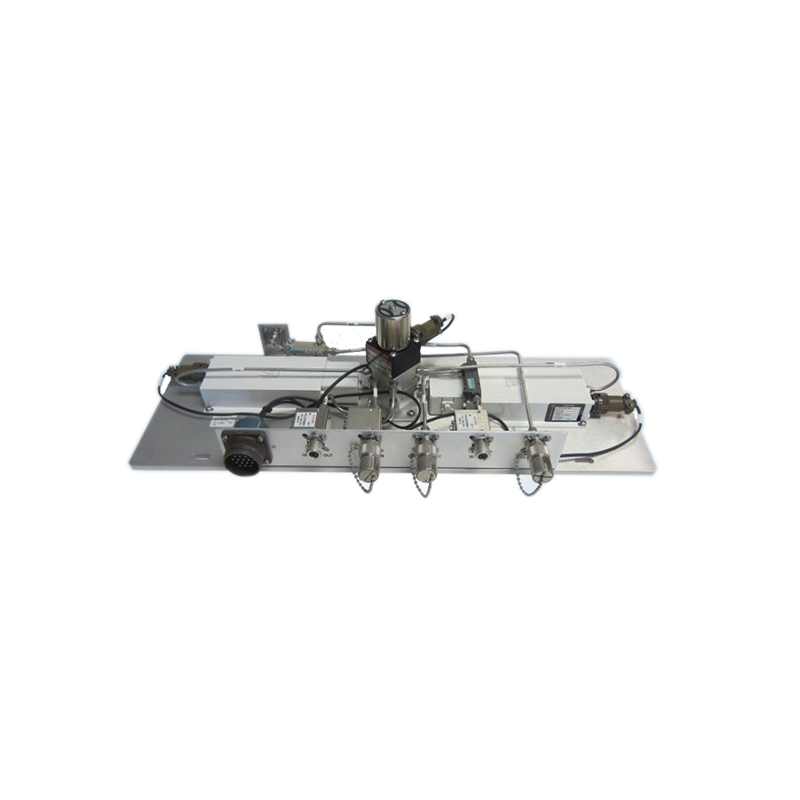
CPI LRL2XXX-XXXXXXX 1:2 L-Band Redundant LNA System
The CPI LRL-1000 1:2 L-band redundant LNA system protects two receiver paths with one shared standby low noise amplifier. If either primary LNA fails, the controller automatically transfers the affected RF path to the standby unit, providing reliable and equipment-efficient redundancy for dual-channel L-band receiving systems.
System Configuration: 1:2 redundancy
LNA Configuration: Two primary LNAs and one shared standby LNA
RF Paths: Two independent receiver paths
Frequency Range: 1510–1577 MHz
LNA Noise Temperature Options: 35 K, 40 K or 45 K
Standard System Noise Contribution: 15 K per primary path; 26 K through standby, excluding LNA
System Noise with Input Couplers: 40 K per primary path; 52 K through standby, excluding LNA
Gain: 48 dB min., 51 dB typ.
Optional High Gain: 58 dB min., 61 dB typ.
Gain Match Between LNAs: 2 dB max.
Gain Flatness: ±0.75 dB over the full band; ±0.30 dB per 10 MHz
Output P1dB: +8 dBm min., +11 dBm typ.
Optional High-Power Output: +18 dBm min., +19 dBm typ.
Input VSWR: 1.25:1 typ., 1.30:1 max.
Output VSWR: 1.20:1 typ., 1.25:1 max.
Standard RF Input Connectors: SMA female
Optional RF Input Connectors: Type N female with input couplers
RF Output Connectors: Type N female
Plate Assembly Power: 11–24 VDC; 10 W typ.
Automatic Switchover Time: 100 ms max.
Network Interface: 10/100Base-T Ethernet
Remote M&C: SNMP v1, v2c and v3; RS-232, RS-422, RS-485 and parallel I/O
Controller Power: 100–135 or 180–240 VAC, 47–63 Hz
Plate Operating Temperature: -40°C to +60°C
Compliance: CE certified, RoHS compliant and EAR99
Key Features:
• One shared standby LNA protects two primary LNAs
• Supports two independent L-band receiver paths
• Automatic transfer of either failed path to the standby LNA
• 1510–1577 MHz L-band frequency coverage
• CPI LL-1500 Series low noise amplifiers
• 35 K, 40 K and 45 K noise-temperature options
• Manual or automatic operation
• Manual RF-switch override
• Independent standby-LNA selection for either RF path
• LNA current and external-alarm monitoring
• User-selectable current tolerance window
• Dual redundant controller power supplies
• Front-panel RF-path and system-status display
• Standard output coaxial isolators
• Optional -30 dB input couplers
• Optional -20 dB output couplers
• Optional terminated offline input and output
• Ethernet, serial and parallel remote control
• Audible fault alarm
• Optional remote control panel for operation up to 4,000 ft. away